
MICHAEL N
Residents in Ntungamo District have expressed mixed reactions and concerns over the forthcoming Local Council One (LC1) and Local Council Two (LC2) elections scheduled by the Electoral Commission to take place within 60 days between March and April.
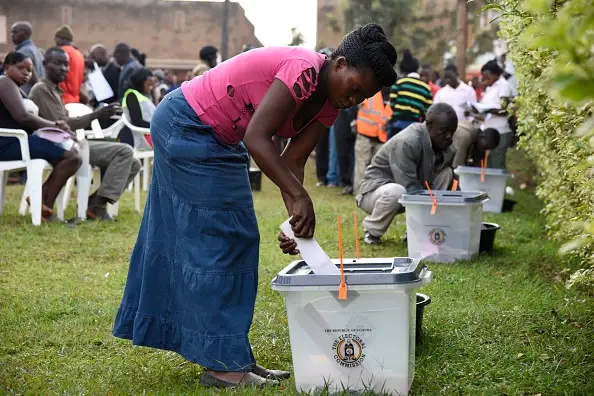
Some residents fear that the voting method of lining up behind candidates may create divisions within communities and families. Jarious Namuri Nesimbi, a resident of Kyabashenyi in Nyamunuka Town Council, said the lining up method can lead to conflicts among neighbours when people openly choose not to support someone from their community. She noted that other elections are conducted through secret ballot, and therefore suggested that ballot papers should also be introduced for LC1 and LC2 elections to maintain harmony among residents.
Winnie Komuhanji also raised concerns, noting that in some villages relatives from the same family are contesting for the same positions. She gave examples where a husband may contest against his father-in-law or other in-laws, which she believes could cause misunderstandings within families. She further observed that voter turnout for the elections might be low compared to elections conducted through secret ballot.
Meanwhile, Wilson Kanyesigye, a resident of Cell Three in Ntungamo Municipality, highlighted several issues that he says are worrying residents ahead of the elections. Among them is uncertainty about which voter registers will be used during the voting exercise. He explained that the Electoral Commission recently released 812 registers in Ntungamo District, yet the district has more than 1,033 villages. According to him, this may result in two or three villages sharing a single polling station. He added that there is a need for the Electoral Commission to conduct fresh village registrations, verification and display of registers, a process that requires sufficient time.
Local leaders have also called for public sensitization ahead of the elections. Alex Mujuni, the LC1 Chairperson of Rutunga Cell in Nyamunuka Town Council, said there is an urgent need for the Electoral Commission to educate the public about the electoral process to avoid possible violence and misunderstandings among residents. He noted that political disagreements have previously caused tensions even among members of the same political party, and warned that without proper sensitization, conflicts could arise during the village elections.
However, not all residents oppose the lining up method. Abel Kwehangana from Itereero Boda Boda Stage welcomed the approach, saying it helps reduce corruption and vote buying. He explained that when people line up publicly, it becomes difficult for voters to accept money from candidates and later vote for someone else. Kwehangana also urged residents to elect leaders based on their ability to mobilize communities, counsel residents, participate in community activities such as Burungi bwa Nsi, attend social functions like burials, and present ideas that can help develop their villages, rather than focusing on political party affiliations.
