
MICHAEL N
Coffee farmers in Ihunga Sub-county, Kajara County in Ntungamo District have been urged to adopt productive and modern farming practices to boost coffee production and improve household incomes.
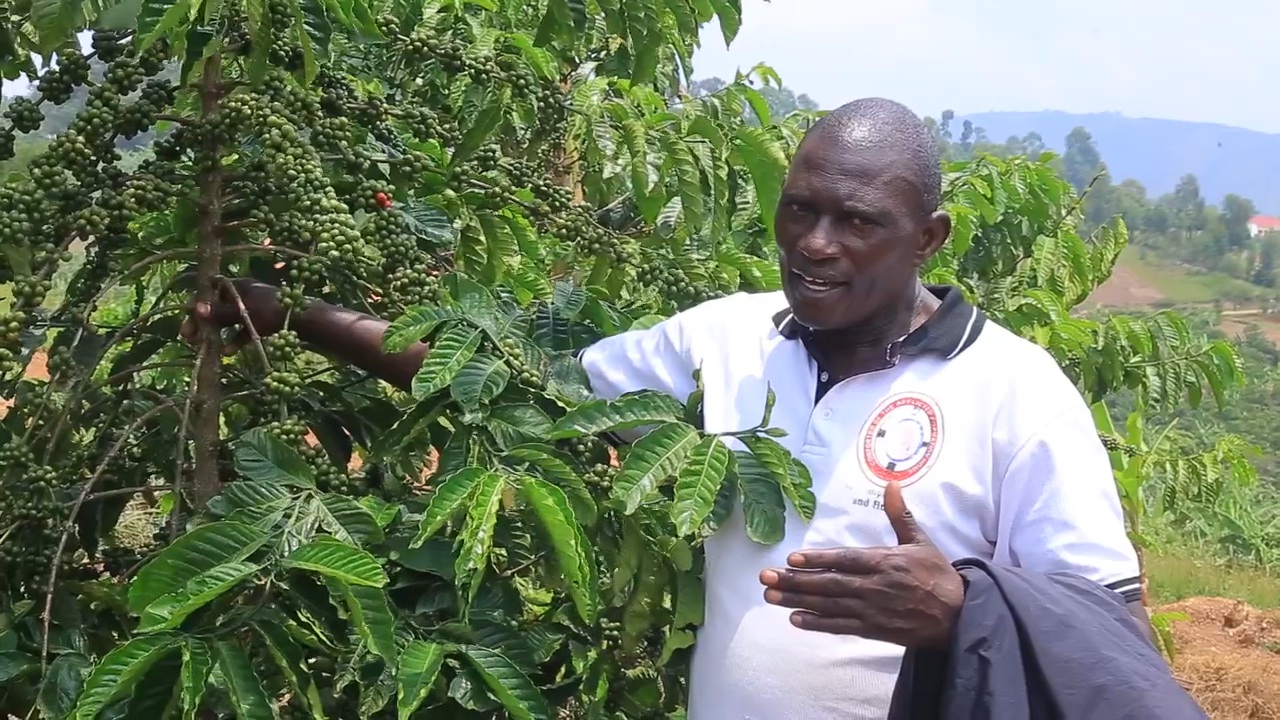
The call was made by the Ihunga Sub-county Agriculture Officer during an inspection visit to Akatakuri Field Farm School. She commended the 30-member farmer group for embracing improved agronomic practices, which have significantly increased both the quality and quantity of their coffee harvests.
The farmers have adopted modern methods such as proper manure and fertilizer application, pruning, mulching, correct spacing, timely planting and harvesting, proper drying techniques, and water conservation measures. These practices, according to agricultural experts, are key to enhancing productivity and ensuring sustainable coffee farming.
The Agriculture Officer applauded the farmers for working together as a united group and for regularly consulting district agricultural officials to acquire new skills and knowledge. She encouraged other farmers in the area to emulate the group’s commitment to modern farming techniques.
She further advised farmers to cut down old coffee trees, noting that younger trees produce higher quality and larger quantities of coffee compared to aging plants. She also revealed that the government has introduced initiatives to support organized farmer groups with irrigation facilities to boost production, especially during dry seasons.
Leaders of the Akatakuri Field Farm School attributed their improved yields to the adoption of recommended practices such as harvesting only mature coffee cherries, regular pruning, removing and burning diseased plant parts instead of relying heavily on pesticides, and maintaining clean gardens. They emphasized that intercropping coffee with food crops has enhanced food security among farming families.
Farmers were also encouraged to prioritize water conservation by digging trenches to control flooding and soil erosion during heavy rains, as well as maintaining clean farms through consistent weeding and pruning.
Technical coffee farmers in the area noted that with proper management, each coffee tree should produce at least four kilograms of clean milled coffee. On average, an acre with about 450 well-maintained coffee trees can yield between one to 1.8 tons of milled coffee, demonstrating the potential of coffee farming when best practices are followed.
Beneficiaries of the training programs say their farms have now become demonstration sites and learning centers for other farmers, reflecting the positive impact of continuous agricultural extension support.
Despite these gains, coffee farmers in Ihunga Sub-county and across Ntungamo District continue to face challenges such as prolonged droughts, poor quality agricultural inputs, and fluctuating coffee prices. However, with sustained collaboration between farmers and extension agricultural officers, there is growing optimism that coffee production and household incomes will continue to improve.
